BHI Colloquium
INPERSON
BHI Conference Room and Zoom
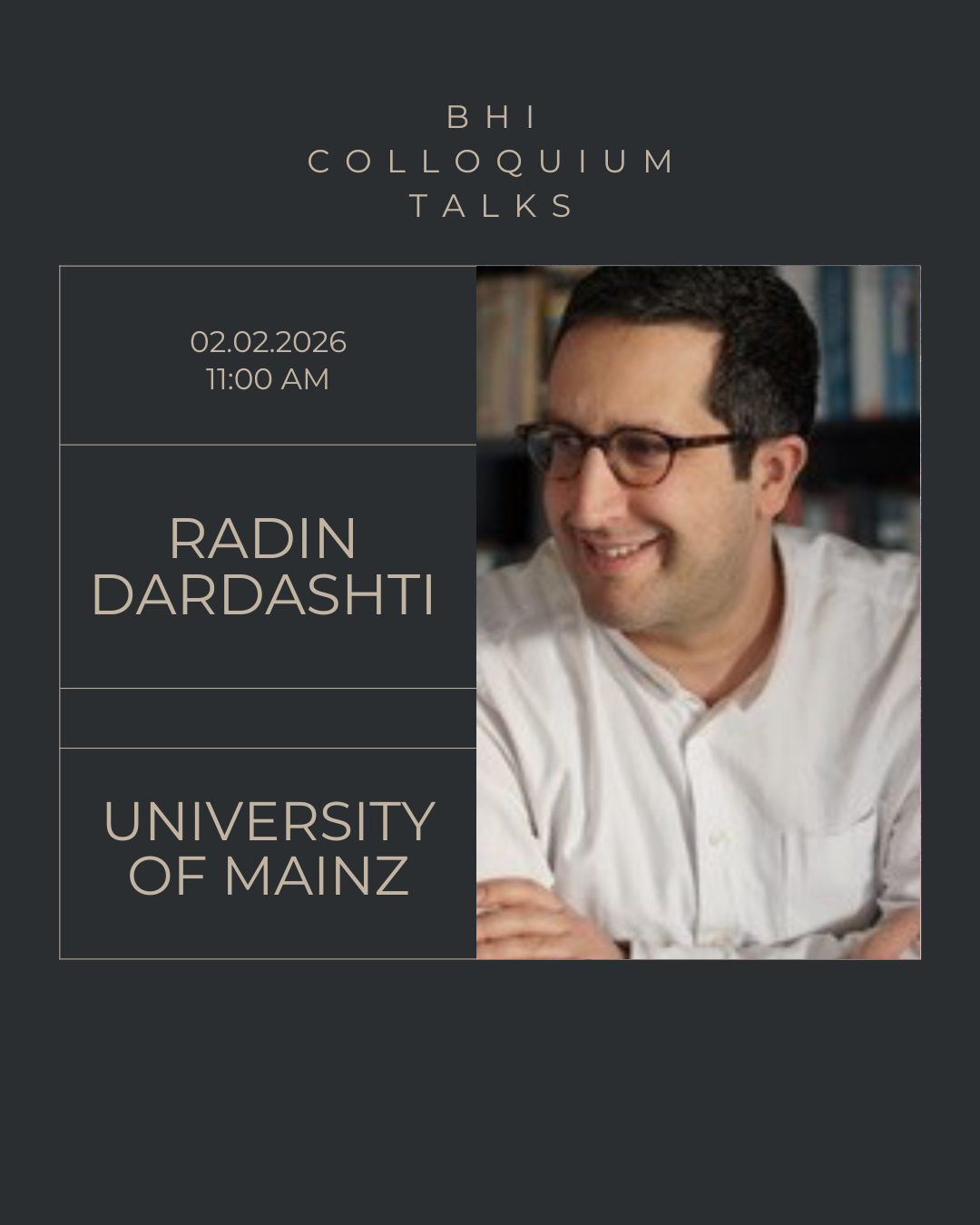
Radin Dardashti
Description
Rethinking Scientific Discovery
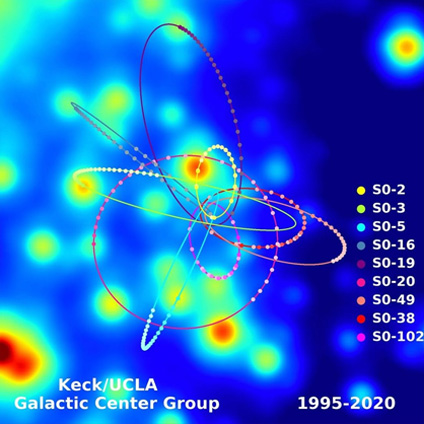
Scientific achievements are often framed as discoveries: prizes are awarded “for the discovery of …,” and discovery carries prestige, authority, and practical consequences for research agendas. Yet it is far from clear when a scientific discovery actually occurs. As Kuhn put it, “neither polemic nor painstaking scholarship has often succeeded in pinpointing the time and place at which a given discovery could properly be said to have ‘been made’.” This talk examines what it would mean to determine the moment of scientific discovery and to what extent such moments depend on convention. While scientific practice often treats discovery as a discrete event – something one either has or has not achieved – accounts of scientific discovery reveal its temporal and conceptual complexity. I begin with Kuhn’s distinction between that- and what-discoveries and Schindler’s refinements of this framework. To address the question of when a discovery occurs, I then draw on the recently proposed Change-Driver account of scientific discovery by Duerr and Mills, which I extend by incorporating a more explicit account of scientific problems. On this problem-oriented view, the timing of discovery is shaped by the evolving structure of problems and by shared conventions governing when a problem is taken to be adequately resolved. The account is illustrated through the cases of black holes and the Higgs boson. I conclude by adopting a cautiously pessimistic stance on the usefulness of the notion of scientific discovery itself, at least as a way of marking clear moments in scientific practice.
When
Monday, February 2, 2026 11:00 AM
Where
Inperson
BHI Conference Room and Zoom
Share
BHI News